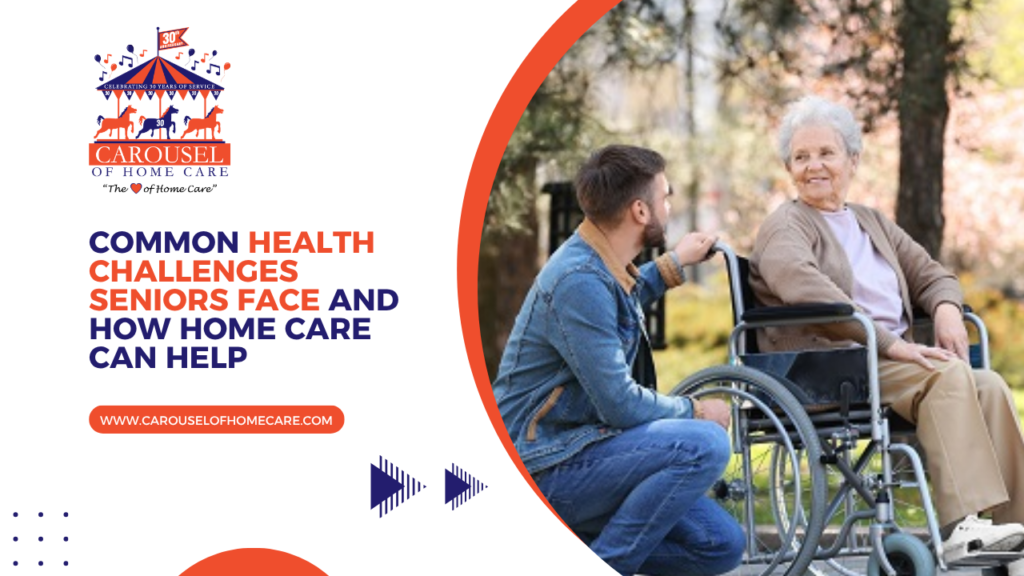
As people get older, maintaining health and independence can become more challenging. Seniors may experience changes in mobility, strength, memory, nutrition, vision, or the ability to manage everyday activities. Chronic health conditions can also make daily routines more difficult.
For families, one of the biggest questions is often: How can we help an aging loved one stay safe and comfortable at home?
This is where senior home care services can make a meaningful difference. Depending on an individual’s needs, home care can provide assistance with daily activities, personal care, meals, companionship, mobility, and other forms of support that help older adults continue living safely in familiar surroundings.
The National Institute on Aging notes that home-based services can help older adults with personal care, household tasks, meals, transportation, safety, and certain healthcare needs.
In this guide, we’ll look at some of the most common health and everyday challenges seniors face and how appropriate home care support can help.
Why Health Challenges Become More Common With Age
Aging itself isn’t an illness. However, the likelihood of developing certain chronic conditions and experiencing changes in strength, balance, vision, hearing, and mobility generally increases with age.
The CDC reports that aging is associated with a higher risk of conditions such as dementia, heart disease, type 2 diabetes, arthritis, and cancer.
These changes don’t necessarily mean a senior needs to leave their home. With the right combination of healthcare, family involvement, and in-home care, many older adults can continue living independently while receiving additional support when needed.
1. Mobility Problems and Reduced Strength
One of the most common challenges seniors face is difficulty moving around safely.
Age-related changes in muscle strength, balance, flexibility, and coordination can make everyday activities more difficult. Getting out of bed, walking around the house, climbing stairs, preparing meals, or getting dressed may require more effort than they once did.
Reduced mobility can also contribute to social isolation because seniors may become less comfortable leaving their homes.
How senior home care services can help
Depending on the care plan and caregiver’s responsibilities, senior home care services may help with everyday activities and mobility-related routines.
Support may include:
- Assistance with daily activities
- Help getting ready for the day
- Mobility support
- Assistance around the home
- Transportation or help getting to appointments when available
- Encouragement to remain active within the individual’s abilities
- Companionship and social support
The goal isn’t to take away a senior’s independence. Instead, appropriate assistance can help them safely participate in everyday life.
2. Falls and Home Safety
Falls are one of the most serious concerns for older adults.
According to the CDC, more than 1 in 4 adults age 65 and older report falling each year, and falls are the leading cause of injury among older adults.
Falls can result in fractures, head injuries, hospitalization, and loss of independence.
Common fall risks can include:
- Poor lighting
- Loose rugs
- Cluttered walkways
- Stairs without adequate support
- Weakness or balance problems
- Vision difficulties
- Certain medications
- Improper footwear
How home care can help with fall prevention
Caregivers can provide practical support with daily routines and help families identify situations that may create safety concerns.
A professional home assessment can also help identify potential hazards and recommend appropriate safety improvements.
The CDC recommends measures such as removing trip hazards, improving lighting, installing appropriate grab bars and railings, reviewing medications with a healthcare professional, and addressing vision and balance concerns.
For seniors who need additional support at home, our Home Assessment and Patient Teaching Services in New Jersey can provide personalized assessment and education.
3. Chronic Health Conditions
Many older adults live with one or more chronic health conditions.
Common conditions include:
- Diabetes
- Arthritis
- High blood pressure
- Heart disease
- COPD
- Osteoporosis
- Dementia
- Parkinson’s disease
Managing these conditions may require regular appointments, medication routines, dietary considerations, monitoring, and support from healthcare professionals.
How home care can help
The type of assistance required depends on the individual’s medical condition and care plan.
Some seniors may benefit from assistance with daily routines, while others may require professional home health care services such as skilled nursing.
For example, Carousel of Home Care provides Skilled Nursing Visits by RNs and LPNs for clients who require professional nursing care and monitoring at home. The company’s services page specifically lists skilled nursing visits as part of its in-home care offerings.
Home care should complement, rather than replace, medical care provided by a physician or other qualified healthcare professional.
4. Memory Changes and Cognitive Challenges
Memory changes can become more noticeable with age. Some older adults may experience mild forgetfulness, while others live with conditions such as Alzheimer’s disease or another form of dementia.
Cognitive changes can affect:
- Remembering appointments
- Following daily routines
- Preparing meals
- Taking medications correctly
- Recognizing safety risks
- Managing household tasks
- Staying socially connected
How senior home care can help
A consistent routine can be valuable for seniors experiencing memory-related challenges.
Depending on the service and care plan, caregivers may provide:
- Companionship
- Assistance with daily routines
- Meal preparation
- Medication reminders
- Light housekeeping
- Errands
- Safety awareness
- Family communication and support
Companion care can be particularly valuable for seniors who live alone and benefit from regular social interaction.
5. Nutrition and Loss of Appetite
Good nutrition becomes increasingly important as people age, but some seniors experience reduced appetite or difficulty preparing balanced meals.
Other challenges may include:
- Difficulty shopping for groceries
- Limited mobility
- Changes in taste or smell
- Difficulty preparing meals
- Dental or chewing concerns
- Forgetting to eat
- Eating alone
Poor nutrition can contribute to weakness and make it harder for a senior to maintain strength and independence.
How home care can help
Depending on the service provided, caregivers may assist with:
- Grocery shopping
- Meal preparation
- Planning meals
- Preparing snacks
- Encouraging regular meals
- Hydration reminders
The National Institute on Aging identifies meal preparation, nutrition, and food services as important forms of support for older adults living at home.
If a senior has a medical condition requiring a specific diet, families should follow recommendations from the person’s physician or qualified healthcare professional.
6. Personal Care and Daily Activities
Some seniors eventually need assistance with everyday activities such as bathing, dressing, grooming, toileting, or moving around the home.
These activities are often referred to as activities of daily living, or ADLs.
Needing help with these tasks doesn’t mean a senior has to give up their independence.
How senior home care services can help
Depending on the type of care arranged, trained caregivers may assist seniors with personal care and everyday routines.
Carousel of Home Care provides Certified Home Health Aide Services in New Jersey, which are designed to provide daily personal care and support.
Personalized support can make daily routines more manageable while allowing seniors to remain in a familiar environment.
7. Loneliness and Social Isolation
Health isn’t only about physical well-being.
Older adults who live alone or have limited mobility may experience loneliness and reduced social interaction. Social isolation can affect emotional well-being and overall quality of life.
The CDC notes that strong social connections are associated with better overall physical and emotional health, lower stress, and greater quality of life.
How companion care can help
A caregiver or companion can provide regular human interaction throughout the day.
Depending on the service, companionship may include:
- Conversation
- Reading
- Games
- Walks
- Hobbies
- Accompanying a client to appointments or errands
- Assistance with light household activities
For seniors who primarily need social interaction and help with household routines, companion care services may be an important part of an overall support plan.
8. Medication Management Challenges
Many older adults take multiple medications. Remembering when to take each medication can become difficult, particularly for seniors experiencing memory problems or complex medication schedules.
Medication-related concerns should always be taken seriously.
How home care can help
Depending on the caregiver’s role and the specific service, home care may provide medication reminders and help clients maintain a consistent daily routine.
However, caregivers should not make medication changes or provide medical advice outside their scope of practice.
If medication administration, clinical monitoring, or other skilled care is required, a licensed healthcare professional may be appropriate.
9. Recovery After Illness, Surgery, or Hospitalization
Returning home after surgery or a hospital stay can be challenging.
A senior may temporarily need additional assistance with:
- Mobility
- Meals
- Personal care
- Household tasks
- Appointments
- Medication routines
- Recovery-related daily activities
Home-based support can help make the transition easier.
For seniors requiring professional nursing care, skilled nursing services at home may provide clinical support according to the individual’s care plan.
For everyday assistance during recovery, non-medical home care may also be appropriate.
10. Vision and Hearing Changes
Changes in vision and hearing can affect a senior’s ability to communicate, move safely, and complete daily activities.
Vision problems can also contribute to fall risk. The CDC notes that older adults with vision impairment may have an increased risk of falls and may have difficulty getting help after a fall.
How home care can help
Caregivers can help seniors maintain safer routines by:
- Keeping frequently used items accessible
- Maintaining clear walking paths
- Providing appropriate assistance with daily activities
- Accompanying seniors during errands or appointments
- Supporting communication with family members
Regular medical and vision evaluations should still be handled by qualified healthcare professionals.
When Should a Family Consider Senior Home Care?
There isn’t one specific moment when every senior should begin receiving home care.
Instead, families should look for changes in everyday life.
Possible signs include:
- Frequent falls or near-falls
- Difficulty preparing meals
- Unexplained weight changes
- Trouble maintaining personal hygiene
- Missed appointments
- Difficulty managing household chores
- Increasing isolation
- Difficulty getting dressed
- Problems remembering daily routines
- A recent hospitalization or surgery
- Family caregivers feeling overwhelmed
If several of these signs are present, it may be worth discussing the situation with the senior and their healthcare provider.
How to Choose the Right Senior Home Care Services
Choosing a home care provider is an important decision. Families should consider the senior’s actual needs rather than simply choosing the largest number of services.
Before hiring an agency, ask:
What type of care does the senior actually need?
Determine whether the person needs companionship, personal care, household assistance, skilled nursing, or a combination of services.
Are caregivers properly trained?
Ask about caregiver qualifications, training, supervision, and background checks.
Can the care plan change?
A senior’s needs may change over time. Ask how the agency handles changes in care requirements.
Is there a clear communication process?
Families should know who to contact if concerns arise or the senior’s condition changes.
Does the agency serve your area?
For New Jersey families, local availability is especially important.
Carousel of Home Care currently serves communities across Monmouth County, Ocean County, Burlington County, and Middlesex County, with service areas including Freehold, Hazlet, Toms River, and surrounding Central New Jersey communities.
How Carousel of Home Care Supports Seniors
At Carousel of Home Care, we understand that every senior has different needs.
Our services include Geriatric Home Care, Certified Home Health Aides, Skilled Nursing Visits by RNs and LPNs, Live-In and Companion services, and Home Assessment and Patient Teaching.
Depending on the individual’s needs and selected service, support may help with personal care, daily activities, companionship, home safety, meals, and professional nursing care.
Our goal is to help seniors maintain comfort, dignity, safety, and independence while remaining in the environment they know best.
Aging in Place With the Right Support
Growing older doesn’t automatically mean someone has to leave the home they love.
The right combination of family support, healthcare, community resources, and senior home care services can help many older adults continue living at home safely and comfortably.
The National Institute on Aging describes home-based care as a combination of health, personal, and other support services that can help people remain at home and live as independently as possible.
The important thing is to evaluate needs early, involve the senior in decisions, and adjust support as circumstances change.
Final Thoughts
Seniors can face a variety of health and everyday challenges as they age, from mobility problems and fall risks to chronic conditions, nutrition concerns, memory changes, and loneliness.
The good news is that families don’t have to manage everything alone.
Senior home care services can provide practical assistance and companionship while helping older adults maintain their routines and independence at home. For seniors who require clinical care, skilled nursing and other professional healthcare services may provide additional support.
If you’re concerned about an aging parent, spouse, or loved one, start by having an honest conversation about what they need and what would make life at home easier.
Carousel of Home Care provides personalized in-home care throughout Central New Jersey and can help families explore appropriate care options based on their individual circumstances.
Frequently Asked Questions
What are senior home care services?
Senior home care services provide personalized support to older adults in their homes. Depending on the type of service, assistance may include personal care, daily activities, meal preparation, companionship, household tasks, or professional healthcare services.
What are the most common health challenges seniors face?
Common challenges can include mobility and balance problems, falls, chronic health conditions, memory changes, nutrition concerns, vision or hearing changes, and difficulty with everyday activities.
How can home care help seniors stay independent?
Home care can provide assistance with tasks that have become difficult while allowing seniors to remain in their familiar surroundings. The type and amount of support should be based on the individual’s needs.
Can home care help prevent falls?
Home care can support safer daily routines and help families identify potential safety concerns. However, fall prevention should also involve appropriate medical evaluation, medication review, vision care, strength and balance activities, and home safety improvements.
What is the difference between home care and skilled nursing?
Non-medical home care generally focuses on daily living support, personal care, companionship, and household assistance. Skilled nursing involves clinical care provided by licensed healthcare professionals. The appropriate service depends on the individual’s needs.
Does Carousel of Home Care provide senior home care services in New Jersey?
Yes. Carousel of Home Care provides geriatric home care and other in-home services in communities across Monmouth, Ocean, Burlington, and Middlesex counties, including Freehold, Hazlet, Toms River, and surrounding areas.